Sprint Strafe Marquez: What We Couldn't Find Online
In an increasingly interconnected digital world, it's rare to stumble upon a concept that seemingly defies documentation. Yet, the enigmatic term "Sprint Strafe Marquez" presents just such a puzzle. Our deep dive into various online repositories, including what we hoped would be rich sources of technical and methodological discussions like Azure DevOps and Jira API documentation, yielded a curious void. Instead of definitions or practical applications, we found ourselves navigating through a labyrinth of boilerplate content, generic signup forms, and tangential programming topics. This absence of direct information leaves us to speculate, interpret, and explore what such a potent combination of words might signify.
This article aims to unravel the layers of "Sprint Strafe Marquez," not by presenting a definitive, pre-existing framework, but by deconstructing its components and proposing what it could represent across different domains. From agile project management to competitive gaming strategies and even personal productivity, the elements of sprint, strafe, and Marquez evoke powerful images of speed, agility, unconventional tactics, and mastery. Join us as we explore the potential meaning and actionable insights derived from this elusive term, transforming a digital void into a canvas for innovative thought.
Deconstructing the Components: Sprint, Strafe, Marquez
To understand what "Sprint Strafe Marquez" might embody, we must first break down its constituent parts and consider their common interpretations:
- Sprint: This term is most famously associated with Agile methodology, denoting a short, time-boxed period during which a team works to complete a defined set of tasks, aiming for rapid iteration and incremental progress. Beyond software development, a 'sprint' implies a burst of high-intensity effort over a short duration, emphasizing speed and focus.
- Strafe: Originating from military aviation, where it describes repeated attacks with low-flying aircraft, 'strafe' has evolved in gaming to mean moving sideways while maintaining forward orientation or target lock. Metaphorically, it suggests an unconventional, lateral, or evasive maneuver, often employed to gain a tactical advantage, avoid obstacles, or target weaknesses from an unexpected angle.
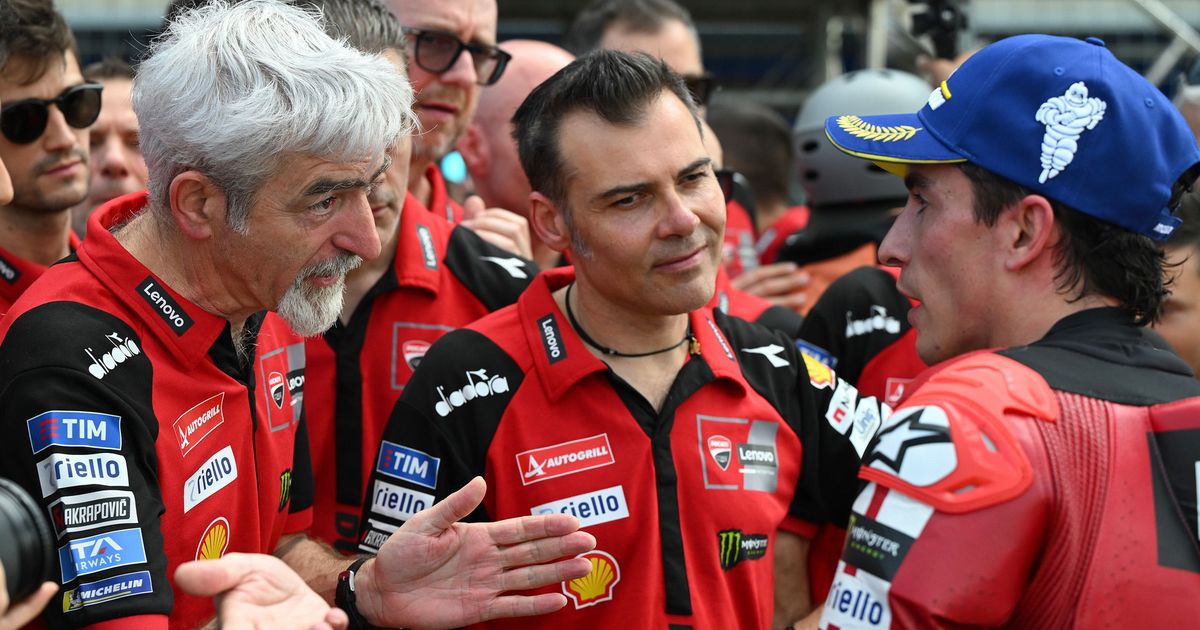
- Marquez: This surname immediately brings to mind Marc Márquez, the celebrated MotoGP rider. Known for his aggressive, daring, and often unconventional riding style, Márquez frequently pushes the limits, executing breathtaking saves and demonstrating unparalleled adaptability and resilience on the track. His name conjures images of mastery, fearlessness, strategic aggression, and the ability to turn near-disasters into triumphs.
When these three concepts converge, "Sprint Strafe Marquez" suggests a methodology or approach characterized by rapid, focused bursts of activity (sprint), executed with unconventional, agile, and perhaps aggressive lateral maneuvers (strafe), all imbued with the strategic genius, adaptability, and boundary-pushing mastery of a Marc Márquez. It speaks to a dynamic, outcome-oriented, and perhaps high-risk, high-reward strategy.
The Digital Void: Why "Sprint Strafe Marquez" Remains Undocumented
Our initial quest for "Sprint Strafe Marquez" led us down numerous digital rabbit holes, only to find the very platforms where such a concept might be discussed—like project management forums, developer communities, or even gaming strategy guides—offering little to no specific mention. The challenge wasn't just finding content, but sifting through the noise of generic website navigation, ubiquitous sign-up prompts, and generalized topic lists that are the digital equivalent of a content mirage.
This lack of a formal definition or widespread discussion is precisely what makes "Sprint Strafe Marquez" so intriguing. It could mean several things:
- It's a nascent or niche concept: Perhaps it's a private jargon, a methodology practiced by a very specific team or individual, not yet formalized or popularized.
- It's a metaphor, not a literal methodology: The term might be an evocative way to describe a certain style of work or play, rather than a structured framework with defined steps.
- The keywords are too broad: While "sprint" and "Marquez" are strong, "strafe" might introduce enough ambiguity to prevent direct indexing for a unique concept.
- It's simply not a real, recognized concept (yet): In this scenario, the term serves as a powerful thought experiment, allowing us to extrapolate valuable principles from its evocative combination.
Regardless of the reason, the absence of direct documentation forces us to navigate a content void. This very absence, however, opens up a unique opportunity to define and explore what such a potent concept *could* entail. For more on navigating this informational landscape, consider The Elusive Sprint Strafe Marquez: Navigating a Content Void.
Hypothetical Applications: Where "Sprint Strafe Marquez" Could Thrive
Given the speculative nature of "Sprint Strafe Marquez," let's imagine where such a philosophy could be incredibly effective:
In Agile & Project Management: A New Paradigm for Problem-Solving
Imagine a "Sprint Strafe Marquez" approach in an Agile environment. This isn't just about completing tasks; it's about aggressively tackling roadblocks and finding unconventional solutions within the sprint timeframe. For example:
- Rapid Adaptability: When a sprint faces an unexpected critical blocker, a "Marquez" team wouldn't simply defer or escalate. They'd execute a "strafe" – a lateral, unconventional pivot – to find an immediate workaround, an alternative tool, or a highly creative solution, much like Márquez making an impossible save.
- Targeted Aggression: Instead of diluting efforts, a "Sprint Strafe Marquez" team would identify the most critical, high-impact issues and dedicate intense, focused "sprints" to "strafe" them out of existence, leveraging ingenuity over brute force.
- Embracing Controlled Chaos: It might involve allowing for more experimentation within a sprint, accepting that some "risky maneuvers" could lead to breakthrough solutions, provided the team has the "Marquez"-like skill to recover quickly from missteps.
Practical Tip: To foster this mentality in your Agile team, encourage brainstorming sessions specifically focused on "what if we tried the opposite?" or "how would a mischievous genius solve this?" during daily stand-ups, challenging conventional problem-solving.
In Gaming & Esports: Mastering the Art of Unpredictable Offense
In the competitive gaming arena, "Sprint Strafe Marquez" could describe a master-level tactic or player archetype:
- The Unpredictable Assassin: A player who combines bursts of speed ("sprint") with evasive, lateral movement ("strafe") to constantly outmaneuver opponents, making them impossible to track. The "Marquez" element adds the layer of fearless aggression, calculated risk-taking, and surprising recovery from seemingly losing positions.
- Strategic Flanking: Instead of direct engagement, a "Sprint Strafe Marquez" player might utilize rapid, sideways movements to quickly flank enemies, striking from unexpected angles, turning the tide of a skirmish.
- Resourceful Escapes: Like Márquez saving a front-end slide, a gamer employing this style might use a combination of rapid movement and lateral thinking to escape seemingly unwinnable situations, turning a retreat into an opportunity.
Fact: Many top-tier esports players are celebrated precisely for their "Marquez-like" ability to innovate tactics on the fly and perform under extreme pressure, often breaking away from established meta-strategies.
In Personal Productivity & Innovation: The Unconventional Breakthrough
Beyond teams and games, individuals can adopt a "Sprint Strafe Marquez" approach to personal challenges:
- Focused Creative Bursts: Dedicate short, intense periods ("sprints") to a creative task, deliberately forcing yourself to "strafe" away from conventional thinking patterns. If you're stuck, instead of pushing harder in the same direction, try a completely different angle or medium for a short burst.
- Problem-Solving with Flair: When faced with a personal or professional roadblock, approach it with a "Marquez" mindset: What's the most unconventional, yet potentially effective, way to tackle this? Can I turn this setback into an advantage with a bold move?
- Embracing Experimentation: The "Marquez" spirit encourages trying new things, even if they seem risky, as long as you build in mechanisms for rapid recovery or learning from failure.
Actionable Advice: Next time you're stuck on a task, set a 15-minute timer ("sprint"). For those 15 minutes, force yourself to work on the problem using only "sideways" thinking ("strafe") – e.g., if writing, try drawing; if coding, try explaining it to a non-technical person. This can unleash your inner "Marquez" creativity.
Cultivating a "Sprint Strafe Marquez" Mentality (Even Without a Formal Definition)
While "Sprint Strafe Marquez" may not be a formally recognized methodology, the powerful ideas it evokes are profoundly valuable. We can actively cultivate a mindset that embodies its core principles:
- Embrace Agility and Speed (The Sprint): Prioritize quick iterations, focused bursts of effort, and rapid delivery. Don't let perfection be the enemy of good, especially in early stages.
- Think Laterally and Unconventionally (The Strafe): Challenge assumptions. Seek alternative paths, even if they seem counter-intuitive. Sometimes, the quickest way forward isn't a straight line.
- Cultivate Resilience and Adaptability (The Marquez): Prepare for the unexpected. Develop the ability to react swiftly to setbacks, make course corrections on the fly, and learn from every near-miss. View challenges not as failures, but as opportunities for a "Márquez-style save."
- Apply Targeted Aggression: Focus your energy with intense purpose. Identify critical junctures or high-impact tasks and commit to them with the conviction of a top-tier performer.
In essence, adopting a "Sprint Strafe Marquez" mentality means approaching challenges with a blend of structured intensity, creative deviation, and fearless adaptability. It's about performing at your peak, not just by following the rules, but by mastering them so thoroughly you know when and how to break them for optimal results. To further explore moving past common digital clutter to find genuine insights, check out Decoding Sprint Strafe Marquez: Beyond Boilerplate and Prompts.
Conclusion
The journey to understand "Sprint Strafe Marquez" has been less about uncovering a predefined doctrine and more about constructing a powerful conceptual framework from compelling linguistic elements. The initial digital silence surrounding the term, characterized by generic content and unhelpful prompts, highlights a common challenge in online research—the struggle to find deeply specific, nuanced information amidst a sea of the general. Yet, by deconstructing "sprint," "strafe," and "Marquez," we've unlocked a rich tapestry of potential meanings applicable across project management, gaming, and personal development.
While "Sprint Strafe Marquez" might not yet be a formal buzzword, its essence speaks to a highly effective, dynamic approach: one that combines rapid, focused effort with unconventional problem-solving and the fearless adaptability of a true master. Perhaps its very absence from formal documentation grants us the freedom to define it for ourselves, inspiring a more agile, creative, and resilient approach to the challenges we face daily. Let the spirit of "Sprint Strafe Marquez" be a call to action: to innovate, to adapt, and to always seek that unexpected path to victory.